Websites
Website redesign, rebuild, or leave it alone?
A website redesign is not always the answer. Five checks that tell you whether your site needs a new look, a new build, or honestly nothing at all.
 Ben Harvieupdated 6 min read
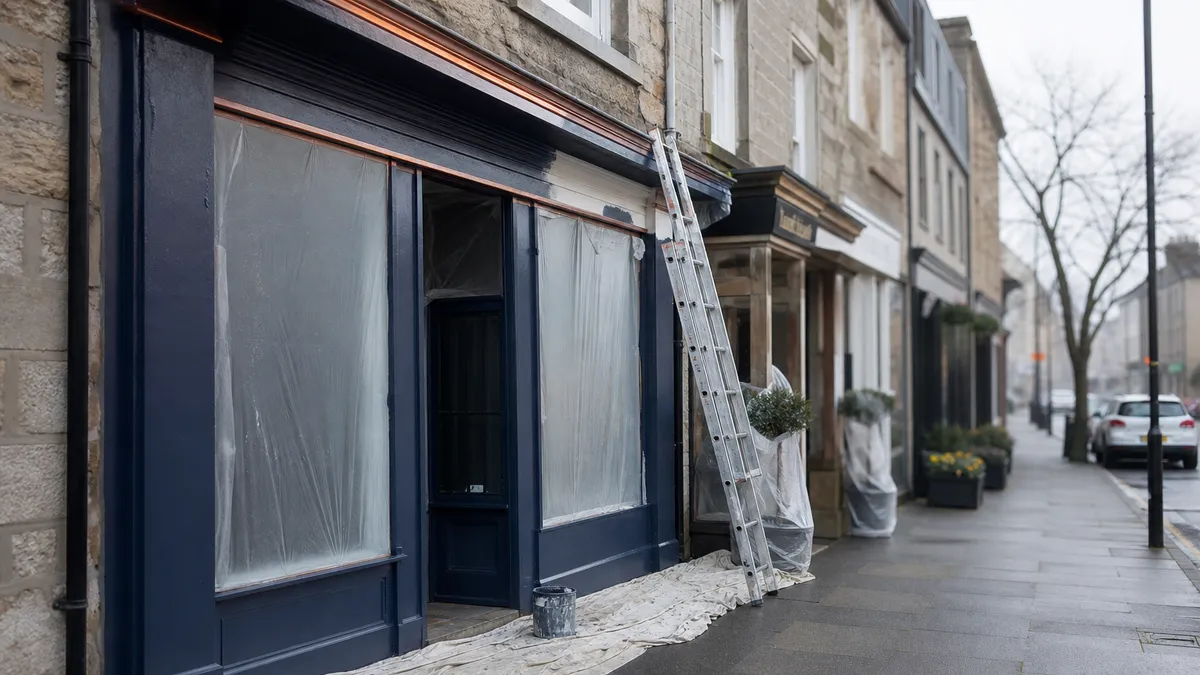
Most people asking for a website redesign have already decided the site looks dated, and looking dated is rarely the expensive problem. Sometimes it is the right diagnosis. Sometimes the site is fine and the real issue is that nobody can find it. And sometimes what looks like a cosmetic job turns out to be a rebuild the moment anybody opens the bonnet.
Here is how to tell which of the three you are actually looking at, before you pay for any of them.
The three honest diagnoses
A redesign. The foundations are sound. The site loads quickly, you or somebody you employ can change the text, the software underneath it is current. What is wrong is the surface: the layout, the photographs, the words, the order the pages are in, the fact that the phone number is three taps down. This is the cheapest of the three and it is genuinely what a lot of sites need.
A rebuild. The foundations are the problem. The site is slow, it was built on something that is no longer supported, it does not work properly on a phone, or you have no way of changing anything without ringing the person who made it. A redesign here is painting over damp. It will look better for a year and then cost you the rebuild anyway.
Leave it alone. The site does its job. It is plain, it is a bit old-fashioned, and it is still telling people what you do and how to reach you on a phone in under three seconds. Money spent here buys you a nicer-looking version of an outcome you already have. There is almost always something better to spend it on.
The unwelcome part is that the third diagnosis is more common than anyone in this trade admits, and the second is more common than clients want to hear.
Five checks that take five minutes
Do these yourself, on your own phone, before anyone quotes you anything.
One: the phone test. Open your site on your mobile, on mobile data rather than the office wifi. Can you read it without pinching? Is the phone number tappable? Can you get to your prices or your contact form in two taps? Most small business traffic in Edinburgh and the Lothians is a phone in somebody's hand in a car park. If the site fails here it fails everywhere else that matters.
Two: the speed test. Count the seconds from tapping the link to the page being usable. Under three is fine. Over five and you are losing people before they see anything at all, and no amount of design fixes that. Run it through Google's PageSpeed Insights if you want a number rather than a stopwatch.
Three: does it say what you do and where. Read the first screen as a stranger. Does it name the trade and the area, such as joiner in Musselburgh or physiotherapist in Livingston, or does it say something like "Quality you can trust since 2009"? If a stranger cannot tell what you sell and where you sell it without scrolling, that is a problem with the words, and word problems are the cheapest ones to fix.
Four: can you update it yourself. Try to change one thing. Your opening hours, a price, a staff name. If you can, good. If you cannot, and the only person who can is unreachable or charges you for a sentence, that is not a design fault. That is a dependency on one person, and it is the one that eventually forces a rebuild at the worst possible moment.
Five: is it secure and current. Does the address start with https and show a padlock? Is the software behind it still getting updates? A site with a browser warning on it is worse than no site, and one missing its security updates gets found by software that hunts for weak sites rather than by a person, usually within days of falling behind.
Score them honestly. Fail four and five and you are looking at a rebuild whatever else you found. Pass everything but three, and you need a writer, not a developer.
What a website redesign actually fixes
A redesign is worth paying for when the thing holding you back is how the site communicates rather than what it is made of. In practice that means:
- The order of the page. Most small business sites bury the thing customers came for. Moving prices, service areas and the phone number up the page often does more for enquiries than a new colour scheme ever will.
- The words. Replacing brochure language with what you would actually say on the phone. This is the single most underrated change and it costs a fraction of a rebuild.
- Photographs. Your real work in place of stock images. A joiner's site with fifteen photographs of finished kitchens wins more enquiries than any layout.
- Trust signals. Accreditations, the years you have traded, real reviews, the areas you cover, a named human being.
- One clear next step per page. Ring, book, or fill in the form. Not all three competing.
What a redesign cannot fix is speed, a dead platform (software nobody updates any more), or your inability to edit your own site. Those are structural.
What only a rebuild fixes
Rebuilds are the right call less often than they are sold, but when they are right they are unambiguous. The honest triggers:
- The site is not usable on a phone, or is a separate cut-down mobile version, which was a 2013 idea.
- It runs on software the maker no longer supports, or a page builder that has been abandoned.
- It is slow because of what it is, not because of one oversized photograph.
- The domain or hosting is in somebody else's name and you cannot get it back without rebuilding elsewhere.
- Nobody can edit it, and nobody can be given the ability to.
- It has been hacked or defaced, and the cleanest route is a fresh build on current software.
A rebuild is also the moment to fix ownership. The domain goes in your business name, you get the logins, and the site is yours whoever maintains it next. If a quote for a rebuild does not say that in writing, ask why.
What leaving it alone looks like
You pass the five checks. Enquiries arrive. The site is dull but honest. In that case the best thing you can do with the budget is usually one of these instead: claim and fill in your Google Business Profile, add two pages answering the questions you get asked on the phone every week, or get better photographs of your actual work.
There is a version of this conversation where somebody tells you the site is fine and to spend the money elsewhere. That is a real answer and you should be suspicious of anyone who never gives it.
What each route costs
Here the cost is kept affordable on purpose, because the point is to help local businesses keep up rather than be priced out. A build or redesign is quoted in writing after a free consultation, with your web address, hosting, an SSL certificate (the padlock in the address bar) and a business email address included for the first year, then one modest monthly fee to keep it online and looked after. Changes and extra work are quoted before they start, too. How it works explains the cost.
So a rebuild has one agreed number and nothing else to pay for twelve months. A redesign of an existing site is quoted as work rather than by the page, because the content already exists and the job is layout, speed and words rather than starting from an empty page, which is usually the cheaper surprise rather than the dearer one.
For the wider market rates, and the four ways a small business normally ends up with a site, there is a full breakdown in how much a small business website costs in Scotland. Whoever quotes you, the number should include the web address in your name, hosting and the padlock, a phone-first design and words written for your business. Anything missing from that list is not cheaper, it is unfinished.
The five checks above are free and take five minutes, and doing them before you ring anybody means you arrive with evidence rather than a feeling. If you would rather somebody went through them with you and said plainly which of the three you need, that is what the consultation (opens in a new tab) is for, including the version where the answer is to leave the site alone.
Talk to Ben about website creation or redesign
Turns the people already searching for what you do into phone calls and enquiries, rather than losing them to a slow, unclear site.