Local
The van, the ditch, and the strangers who pulled me out
My campervan went over the edge at Loch Lomond and into the bushes. A post about keeping going when things go wrong, and the strangers who stop to help.
 Ben Harvie6 min read
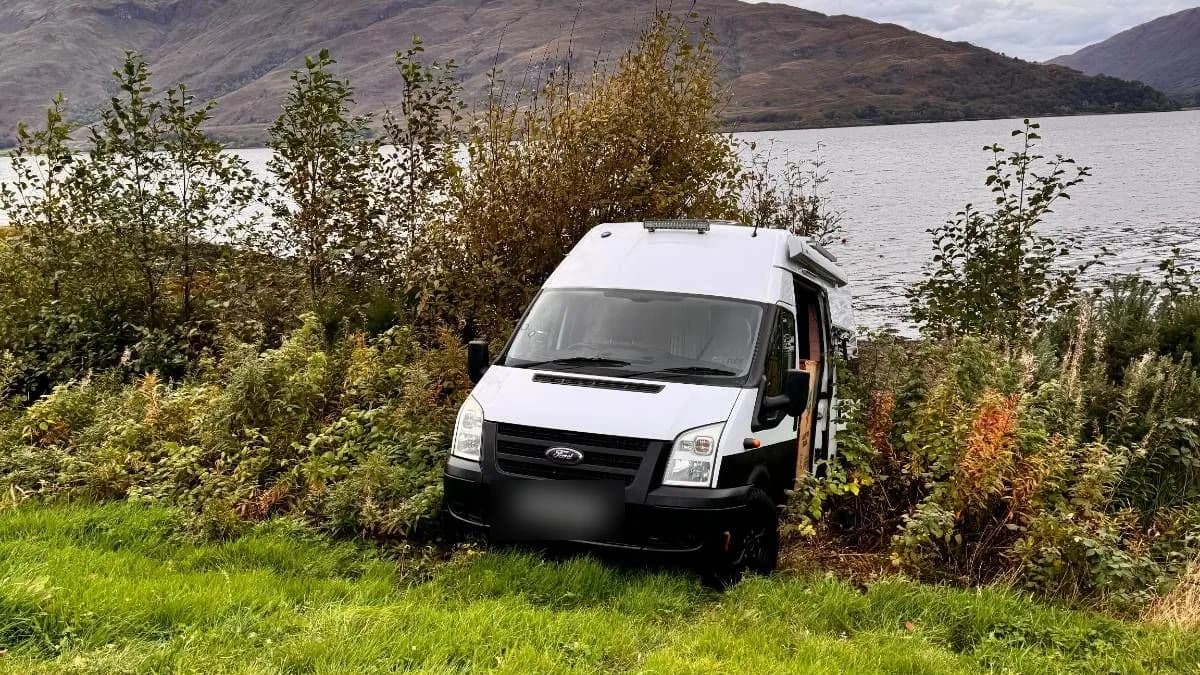
The photo at the top is my campervan nose-down in the bushes at the edge of Loch Lomond. The front wheels went over the edge and the whole van ended up leaning towards the water at an angle no van should sit at.
I am telling this story on a business website because I think it is the most honest thing I can tell you about how I work. Not the finished sites and the nice photos, but what happens when the day goes badly, and how it gets to the end anyway. The short version is that it took two things: not giving up, and people I had never met deciding to help. Every sticky situation I have been in, on the road or at a desk, came right for the same two reasons.
Stop and look
The first thing I did was nothing. I got out, walked round the van, and looked. The front end was down in the bushes, the back wheels had nothing under them that would hold a reverse, and the loch was closer than I liked. Every instinct said to get in and try to drive it out. Every bit of experience said that was how a van in the bushes becomes a van in the water.
So I did not. I stood still for a minute and worked out what I actually had, and as it turned out I did not need the full minute.
That pause is the whole trick, and it took me years to learn it. When something goes wrong, the useful first move is almost never a move. It is a look.
The people who stopped
Some fellow campers nearby had seen it happen, and they were over before we had finished looking. Within fifteen minutes the van was back out and sitting level, with no damage done.
None of them had to come over. We were strangers to them. They came because that is what people do when they see somebody stuck, and because somebody once did the same for them.
We shared a coffee afterwards, and that evening we made them dinner. It felt like the least we could do.
Keeping going
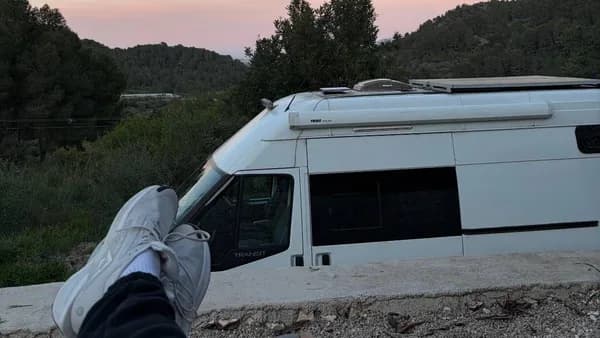
Some weeks later the same van was a long way south, parked at a viewpoint above Gaucín in Andalusia. Level, dusty, and none the worse. I still got down underneath afterwards to check nothing had bent, and nothing had. The work I had promised for that day still went out on time.
That is the bit I would like you to take from this, if you take anything. The ditch was not the story. The story was what came straight after: checking the van, doing the work, and carrying on. Most of what I have built in twenty years of this came from being the person who kept going on the problem after the point where it would have been reasonable to stop.
The ditch in every project
Every project has one. Not a disaster, usually, but a moment where the plan meets the ground and the ground gives way.
The old booking system that was supposed to export its customers cleanly, and exports them with half the phone numbers in the wrong column. The card payment provider whose approval takes three weeks instead of three days. The supplier who swore their stock feed was ready and goes quiet the week before launch. The photo shoot that gets rained off. The owner who, two days before going live, realises the opening hours on the site are the old ones and has been too busy to say.
What I do in those moments is exactly what I did beside the van. Stop. Look at what I actually have. Then keep going, in smaller steps than I had planned, until the thing is level again.
The booking data gets fixed column by column rather than thrown away. The launch goes ahead with card payments switched off for a fortnight and a note on the page saying so, rather than slipping a month.
The stock feed gets replaced with a simple spreadsheet the supplier can keep up to date, because the perfect feed was never coming. None of that is clever. It is just not giving up on the day.
And the strangers. No one person can pull every van out on their own, and the projects that go well are the ones where I know who to ring. The accountant who tells me how a client's invoices really need to look. The photographer in Leith who will shoot a shop at short notice. The payment provider's one support person who actually answers. A developer I have never met who wrote up the exact problem I was stuck on, years ago, for nothing. Half of what I know came from people who stopped to help when they did not have to, and most of what I do for a client is knowing which of them to ask.
When the site breaks later
The same two things apply after the project ends. Your website will have a bad day at some point: a form stops sending, an update breaks a page, the web address lapses because the renewal email went to an old inbox. On a site I look after, there is a daily check that emails me if the contact form stops delivering, a copy of every change so a bad one can be undone in a minute, and that same short list of people for the things I do not do myself. The version of me standing beside the van, working out what I have got, is the version you want looking at your site when it breaks.
When keeping going is the wrong call
Here is the unwelcome part, because a post about perseverance without it would be a motivational poster.
When you are making it worse. If I had kept revving, the van would be on its side. If a developer keeps patching a site that was built badly, you end up paying for a rebuild and the patches. Sometimes the brave thing is to stop and say so.
When you should be asking, not pushing. Help from strangers only works if you let it. The campers at Loch Lomond could only help because we said yes when they came over. If your website has been "nearly fixed" for a month, that is the moment to ring somebody else, and a good developer will tell you that themselves.
When the thing is not worth it. Not every ditch is worth the climb out. A site that costs more to keep alive than it brings in should be let go and replaced with something simpler. I will say that to a client's face, and I have.
Thank you
To the campers on the shore of Loch Lomond, who would take nothing more than a coffee and a dinner for their trouble: thank you. I think about you most times I pass somebody with the bonnet up, and I stop now, which is the only way I know to pay it back.
If you would like a site with somebody walking round it, that is what management and maintenance is: the daily checks, the backups, and a person who keeps going until it is fixed and tells you the truth while they do. If you are not sure you need it, book a free consultation (opens in a new tab) and I will tell you plainly, including if the answer is no.
Talk to Ben about management and maintenance
An optional extra on top of the running costs: your site kept current, updated and backed up, with a local number to ring.