Local
Old Town Edinburgh: getting found by visitors on a phone
Old Town and Royal Mile businesses are found by visitors on a phone a few streets away. What to fix first on Google, and when to leave the website alone.
 Ben Harvie6 min read
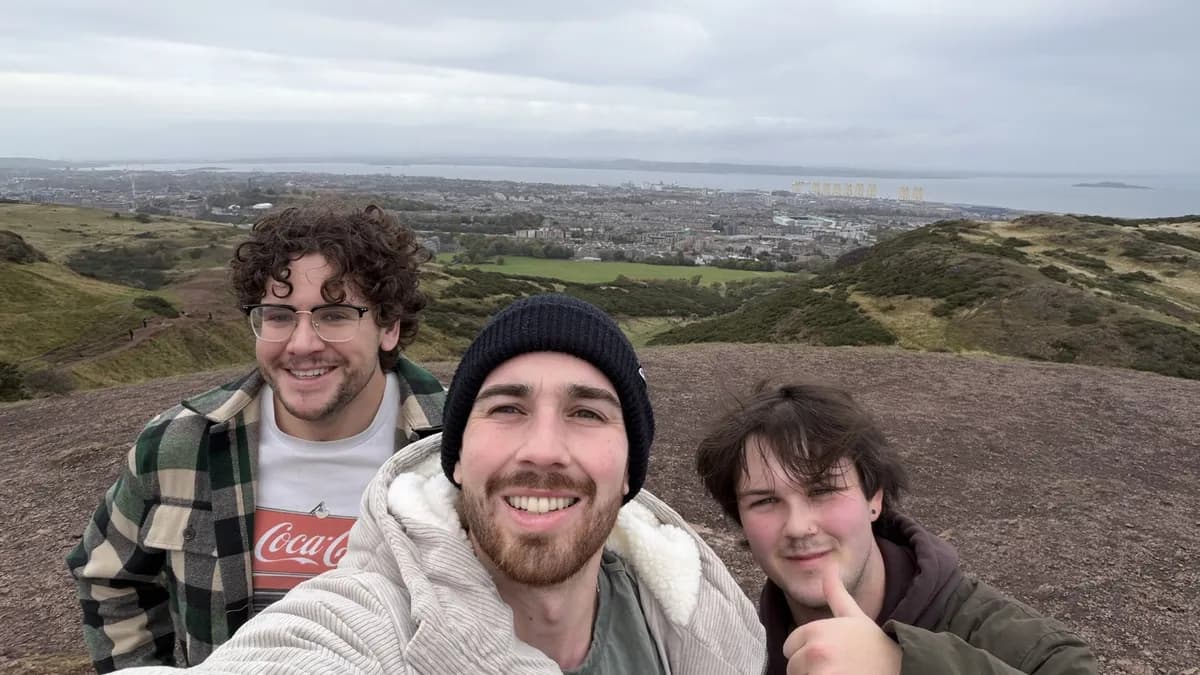
The photo at the top was taken on the summit of Arthur's Seat on a grey afternoon: me in the middle in the beanie, my two cousins either side, and the whole of Edinburgh spread out behind us down to the Firth of Forth. We climb it whenever they visit. It is the best way I know to explain the city to somebody, because from up there you can see how close everything is.
The Old Town is a short walk from the bottom of that hill. I grew up in East Lothian and I work from Portobello, so the Royal Mile is not my patch in the way Musselburgh or Leith is. But it is the part of Edinburgh most of the world knows, and the businesses in it have a problem the rest of the city mostly does not: most of their customers have never been there before.
Who is actually looking for an Old Town business
Think about who walks down Victoria Street or along the Canongate on a Tuesday in October. Some are locals cutting through. Most are visitors on a city break, walking between the Castle and the Palace of Holyroodhouse, or coming down off Arthur's Seat looking for somewhere to sit and eat.
Nearly all of them have a phone in their hand, and hardly any of them are typing your business name. They search for "cafe near me", "whisky shop" or "lunch Grassmarket", often standing a few streets away. What they see first is not your website. It is the map, with a handful of businesses pinned on it, and the listing that sits under each pin.
That listing is your Google Business Profile: the free listing that shows your opening hours, reviews and map pin. For an Old Town business it is often the most read thing about you on the internet, and it is usually the least looked after.
What to get right on the Google Business Profile first
Most of the fixes are dull. They matter more here than almost anywhere else in the city, because a visitor has no other way of knowing about you.
- Opening hours that are true. That includes August, the early closes in winter and the bank holidays. A visitor who walks up the hill to a locked door does not come back.
- The right pin. Old Town addresses are confusing: closes, wynds, basements and rooms up a stair. Check the pin sits on your door, and add a line saying how to find it.
- Photos of the inside and the entrance. People choose a cafe from a photo, and they need to recognise the door when they get there.
- The right category. "Cafe" and "coffee shop" are different categories on Google. Pick the one somebody would actually search for.
- Answers to the obvious questions. Cards only or cash too, step-free access or not, dogs welcome or not.
- Replies to reviews. Short and polite, every one, including the bad ones.
None of that costs anything but time. I would do every item on that list before spending a penny on the website. I have written a longer guide to setting up a Google Business Profile properly if you want to work through it step by step.
Where the website still matters
A visitor who taps through from the map is deciding in seconds. What they want from your website is narrower than most owners think.
They want to know what you are, in one line, at the top. They want the menu or the range, readable on a phone without zooming. They want to know whether they need to book, and if so, a way to do it that does not involve ringing a number from a foreign mobile. And they want the address written out in words, with a note about which close or which door.
That is most of it. A history of the building is lovely and belongs further down the page. A full-screen video on the home page is the opposite of what a person on one bar of signal halfway up a close needs, and between the old stone walls the signal really can be that bad.
There is a second reader too. When somebody asks an AI assistant (software that can read, write and answer questions like a quick assistant) for a good place for lunch near the Castle, the answer is pieced together from listings, reviews and websites. A site that says plainly what you are, where you are and when you are open is easier to recommend than one that hides it in a slideshow. I wrote more about how AI assistants choose a local business if that is worth your time.
Visitors who read English as a second language
A lot of Old Town trade comes from people who do not read English as a first language. You do not need to translate your website into six languages, and I would not suggest it. A badly translated page often does more harm than good, and keeping six versions up to date is a job nobody does.
What helps more is plain writing. Short sentences. Opening hours as numbers rather than prose. A menu with each dish described as well as named. Photos that show what a thing is. Plain English goes through a phone's translate button cleanly, and clever wordplay does not.
The August question
Every August the Old Town fills up for the festivals, and some owners feel they should have a special page, or even a special site, for the month. Usually they should not.
What actually changes in August is your hours, maybe your menu, and whether you take walk-ins. Change those on the Google Business Profile and on the one page of your site that already lists them, then change them back in September. A separate festival site is one more thing to forget, and last year's festival page still showing in October is worse than no page at all.
When not to bother with search work
Here is the unwelcome part. If you are on the Royal Mile itself, with a shopfront that thousands of people walk past every day, SEO (the work of making your business easier to find on Google) will make a smaller difference to you than to almost anyone else in the city. Your footfall is doing that job already. Get the Google Business Profile right, answer your reviews, and spend your time on the shop.
The businesses that gain most are the ones just off the main street: down a close, up a stair, in a basement on Cockburn Street, round the corner in the Grassmarket. Those are the places a visitor would walk straight past unless the map tells them to stop. If that is you, it is worth doing properly.
And if you already have a profile with good reviews, true hours and a site that loads quickly on a phone, you are ahead of a lot of your neighbours. Leave it alone and check it once a quarter.
Talk it through before you spend anything
If you run a business in the Old Town, around Holyrood or anywhere in the city centre, and you are not sure whether your listing or your site is losing you visitors, I will look at both with you. You can read how I handle SEO and Google Business Profiles, and the first conversation costs nothing. If the honest answer is to change nothing, I will say so. Book a free consultation (opens in a new tab).
Talk to Ben about SEO and Google Business Profile
Getting found on Google by people near you who are ready to buy, so the site earns more visits, enquiries and calls.